Shoreline Drive is the heart of Long Beach on any normal weekend — a wide, palm-lined boulevard running along the waterfront, carrying traffic smoothly from the 710 freeway terminus toward the convention center and beyond. Then April arrives, and the city closes the whole thing for a race. The Acura Grand Prix of Long Beach transforms roughly 1.968 miles of downtown Long Beach streets into a temporary motorsport circuit, draws more than 200,000 fans across a three-day weekend, and leaves every approach road into the circuit area — Shoreline Drive, Pine Avenue, Seaside Way — either closed outright, restricted to credentialed vehicles, or backed up for hours.
Renting a bus to the Grand Prix of Long Beach cuts through every one of those friction points: your group rides together from one pickup point, drops at the official circuit entrance on First Street, and has a vehicle staged and waiting after the race while everyone else is competing for surge-priced rideshares. This guide covers exactly how that works — the drop-off zone, the parking reality, the road closures, and everything else your group needs to plan the trip without surprises.
Why Rent a Bus to the Grand Prix of Long Beach
The Grand Prix presents a specific logistical problem that gets worse the larger your group is. The circuit sits in the middle of downtown Long Beach — centered on the Long Beach Convention & Entertainment Center (300 East Ocean Blvd, Long Beach, CA 90802) — and everything useful for parking is either sold as a pre-purchased pass, too far to walk from, or buried behind one of the road closures that blanket the area starting mid-week before the race. You cannot improvise parking on race weekend.
Pike Parking and Shoreline Parking — the two main event lots — require passes purchased in advance, and they sell out before race weekend for high-demand years. By Sunday afternoon, with 200,000-plus fans heading for the exits at once, the 710 freeway backup stretches miles north and rideshare pricing spikes sharply.
A Long Beach charter bus or party bus rental dissolves the whole problem. Your group loads at one location — a downtown LA hotel, an Anaheim meeting point, an airport pickup after a flight — and the bus puts everyone at the official drop-off zone on First Street, steps from the circuit gates, with no parking strategy, no splitting into four separate rideshares, and no one drawing straws for who stays sober to drive home. After the race, the bus is staged nearby.
Everyone climbs back on and rolls home while the lot lines are still three blocks long. That's the case for renting a bus to the Long Beach Grand Prix, and it holds every April.
Charter Bus & Party Bus Drop-Off at the Grand Prix of Long Beach
The official drop-off point for rideshares, taxis, and private vehicles at the Grand Prix is First Street between Elm Avenue and Long Beach Boulevard, per the official Grand Prix directions page. That is the zone where Uber, Lyft, and taxi services are directed, and it is the same approach a charter bus or party bus rental uses to unload your group. First Street runs along the north edge of the circuit area — close enough that your group walks directly toward the gates once the bus pulls up, without crossing any closed streets or navigating lot access roads.
That proximity matters more than it sounds. The Metro A Line's 1st Street station sits at Long Beach Boulevard and 1st Street — essentially the eastern anchor of the official drop-off zone — which tells you exactly how central this block is to the race entrance. A charter bus deposits your whole group at the same spot in one movement.
No train transfers, no coordinating multiple pickup windows, no half your group still in traffic when the other half is already through the gate. One bus, one drop, one walk in.
The official drop-off for the Grand Prix of Long Beach is First Street between Elm Avenue and Long Beach Boulevard — a single block walk from the circuit gates, per the event's own published directions. That is where the bus puts your group, and it is where the bus stages nearby when you are ready to leave after the race.
For the return pickup, set the window before the race starts. Post-race, First Street fills with fans walking out simultaneously, and the drop-off zone gets congested quickly. A realistic buffer — 30 to 45 minutes after the final lap, then the bus moves in — keeps everyone calm and together rather than scattered across a rideshare surge queue.
The approach back into the drop-off zone follows the same First Street corridor your bus used on the way in, since Shoreline Drive and the other circuit streets do not reopen until well after the checkered flag.
Parking at the Grand Prix of Long Beach: What You Are Really Dealing With
The Grand Prix operates two main event lots, both requiring pre-purchased passes — there is no drive-up-and-pay option at either. Pike Parking is at Chestnut Avenue and Seaside Way, adjacent to Turn 5 of the circuit, which means on race day the IndyCar and IMSA machinery is literally passing your parking structure. Entry is via Chestnut Ave. at Ocean Blvd., and Pike passes are sold on a three-day basis only.
Shoreline Parking sits west of the circuit at the end of the 710 freeway, entered via Broadway to Magnolia Street to Ocean Boulevard to Golden Shore Avenue. Shoreline is available as a three-day or single-day option. Both lots open at 7 a.m. daily, and the Grand Prix is clear on its official circuit map page that passes are first-come, first-serve within the pre-purchased allocation.
Beyond the two event lots, the City of Long Beach has additional downtown garages — the Molina Healthcare parking garage on West Ocean Boulevard near the World Trade Center has served as overflow during race days — and LAZ Parking manages additional city-owned lots available through parklb.com. Across all of them, the rules are uniform: no tailgating permitted in any reserved parking area, no overnight camping, and hang tags must be displayed or the vehicle is towed. The Grand Prix is not a stadium tailgate situation — the energy is inside the gates, not in the parking structure.
One bus carrying 40 or 50 people replaces a column of cars, each needing its own pre-purchased pass, its own approach route through a closure-riddled grid, and its own designated non-drinker. The per-person math tilts decisively toward one bus for any group past two or three cars' worth of people — and the bus skips the pre-purchased lot entirely, going straight to the First Street drop-off instead.
Grand Prix of Long Beach Road Closures: What Shuts Down and When
The closures at the Grand Prix are extensive, and they begin days before the first car takes the track. For the 2026 event, the City of Long Beach published the following closure schedule: setup closures start mid-week before race weekend, with side streets off Shoreline Drive and Seaside Way closing at 4 a.m. and westbound Shoreline Drive itself closing at 7 a.m. By early afternoon that same day, eastbound Shoreline Drive between Broadway and Ocean Boulevard closes — effectively cutting off the circuit area from most normal vehicular approaches.
On race days proper, southbound Pine Avenue is closed to all traffic at 6 a.m. The interior streets of The Pike north of Shoreline Drive close. Access to the Hyatt, Shoreline Village, and the Shoreline Marina from Ocean Boulevard and Pine Avenue closes.
Evening reopenings — Pine Avenue at 7 p.m. for tenant access — provide partial relief, but full traffic restoration to all major routes including Shoreline Drive and the Queensway Bridge does not happen until the day after the race concludes, once the circuit fencing and barriers come down.
This is the detail most first-timers miss: you cannot drive your group into downtown Long Beach on race morning and sort out the approach on the fly. The roads that feel natural — southbound Pine, westbound Shoreline, Seaside Way — are all closed before most fans finish breakfast. A charter bus navigating from the north approaches via Ocean Boulevard and Long Beach Boulevard, using the corridor that leads to the First Street drop-off rather than any of the closed circuit streets.
Grand Prix of Long Beach Transportation: Every Option Compared
The Grand Prix of Long Beach is one of the rare events where the organizers actively steer attendees away from driving. The official directions page states that "surface transportation will take you right to the downtown gates of the Grand Prix circuit with no gridlock worries" — that is the event's own assessment of what happens when you drive. Here is how all five realistic options for a group stack up.
| Option | Cost shape | Arrive together? | Door-to-door? | Post-race pickup | Best group size |
|---|---|---|---|---|---|
| Private charter bus or party bus | One flat rate, split by the group | Yes — one vehicle, one arrival | Best — First St. drop-off, steps from the gates | Bus is staged, ready when you walk out | 15–56 |
| Metro A Line (Blue Line) | Per fare from your boarding point | Only if everyone boards at the same station | Good — 1st Street station is at the drop-off zone | Crowded post-race train platform | Any size, but no group control |
| Metrolink + Metro A transfer | Per fare from OC or LA County | Only if everyone is on the same train | Good — same end point as Metro A Line | Transfer plus a packed return train | Small groups from a shared origin |
| Rideshare (Uber / Lyft) | Per car each way plus post-race surge | No — multiple cars, multiple ETAs | Fair — official zone on First St., but post-race pricing spikes | Surge pricing plus extended wait | 1–4 per car |
| Drive and park (Pike or Shoreline lots) | Pre-purchased pass per car, no day-of options | No — coordinate across a crowded lot | Depends on lot assignment and event closures | Lot line plus 710 freeway backup | 1–2 cars maximum |
For one or two people with easy Metro access, the A Line is genuinely excellent — the 1st Street station drops you at the eastern edge of the drop-off zone with no parking headaches. But for a group of ten or more coming from LA, Orange County, or any point that does not share a single Metro boarding station, private group transportation is the cleaner answer. Everyone gets on the bus together, rides together, and steps off together — and nobody stands on a packed platform at 5 p.m. waiting for the post-race train among 200,000 other fans.
What Size Bus Does Your Group Need for the Grand Prix of Long Beach?
The Grand Prix draws every variety of group — corporate hospitality groups with paddock passes, large fan contingents from across Southern California, out-of-town racing fans coordinating from LAX or Long Beach Airport, and local groups that simply want to make a full day of it without the parking battle. The right vehicle depends on your headcount and how far you are traveling. Here is how the full vehicle lineup maps to a Grand Prix trip.
| Vehicle | Seats | Storage | Best for | Key amenities |
|---|---|---|---|---|
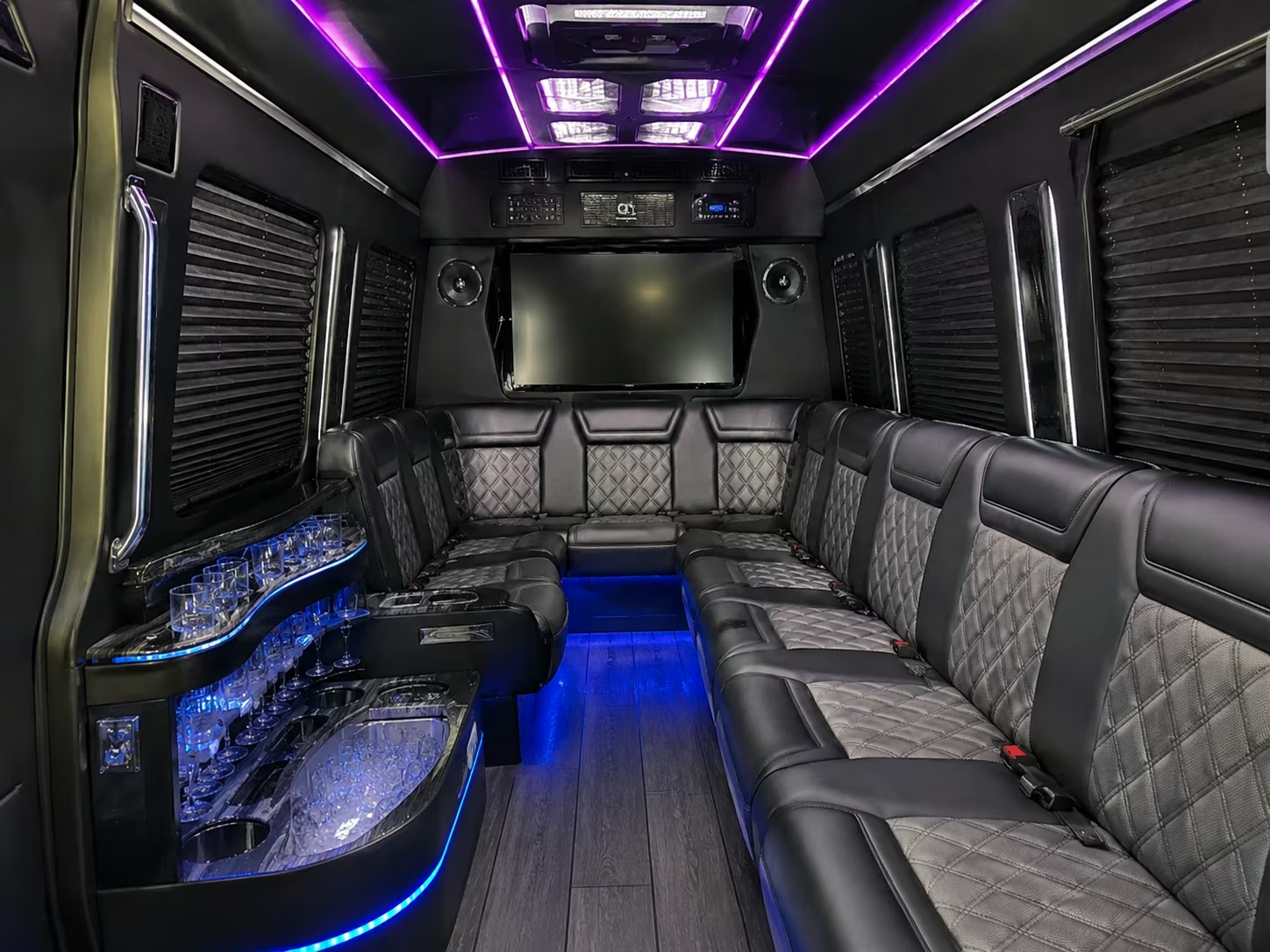
| 14-passenger Sprinter limo / Sprinter van | Up to ~14 | Modest — camera bags, personal gear | Corporate paddock-pass groups, VIP hospitality runs | Premium leather, USB charging, tinted privacy windows |
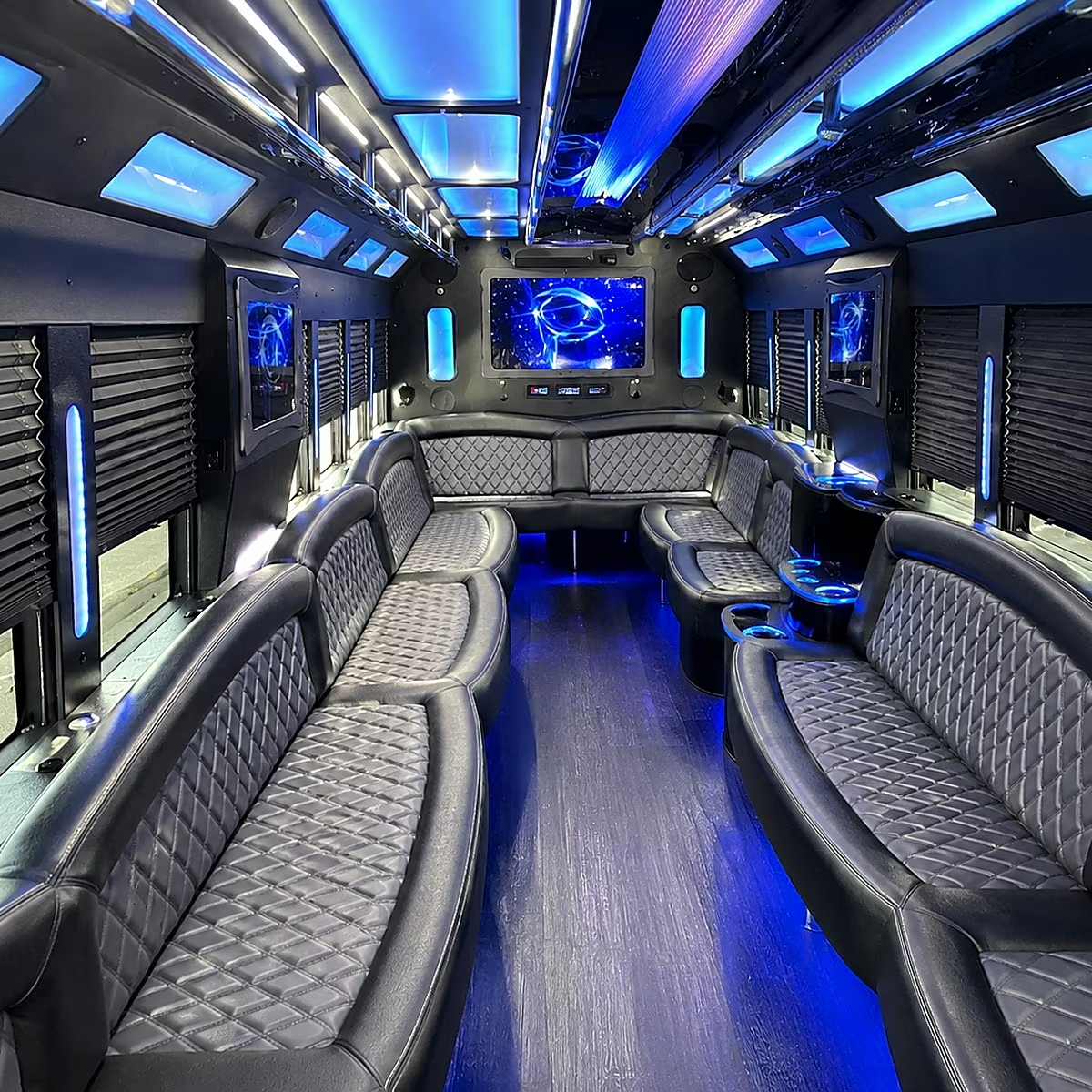
| Party bus (15–50 passengers) | ~15–50 | Onboard, lighter loads | Fan groups that want the race-day energy to start on the ride down | LED lighting, Bluetooth sound system, flat-panel TVs, perimeter seating |
| 15–35 passenger minibus | ~15–35 | Overhead plus some underfloor storage | Mid-size groups from OC or the South Bay; greater maneuverability downtown | Powerful A/C, plush reclining seats |
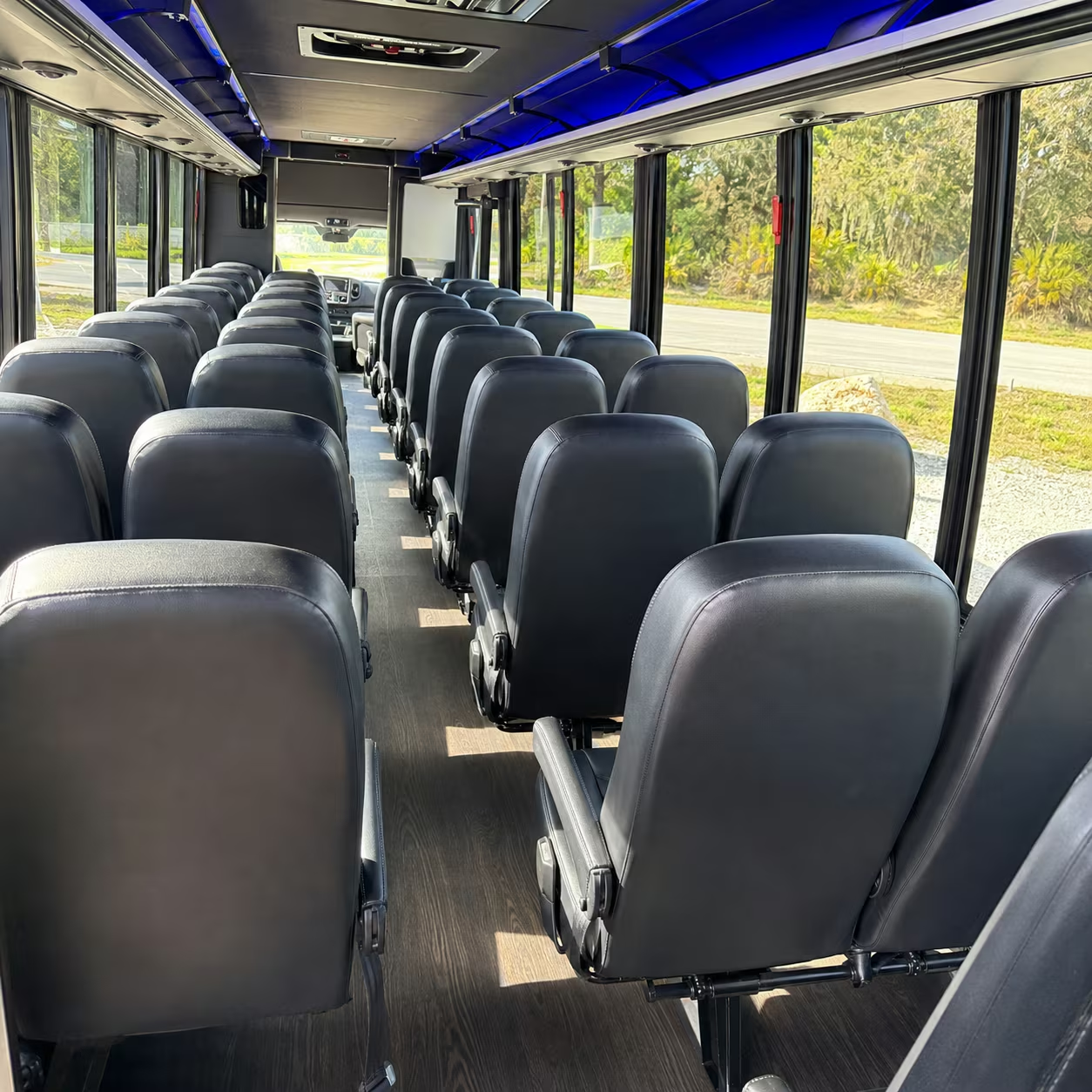
| 40–56 passenger charter bus | Up to 56 | Excellent — deep undercarriage bays | Large groups from LA, the Valley, or Riverside; longer hauls that need an onboard restroom | Reclining seats, climate control, WiFi, power outlets, onboard restroom, undercarriage bays |
For groups traveling from LA or the South Bay, a 40- to 56-passenger charter bus handles the 25-mile southbound run on I-110 or I-710 cleanly — the deep undercarriage bays hold whatever camera bags, folding chairs, or gear your group brings, and the onboard restroom means no counting down stops on the way home from a long day in the sun. For a mid-size group from Anaheim or the OC side, a minibus keeps things nimble through the Long Beach downtown grid. If your group of 20 or 25 wants the racing energy to start before the first qualifying session, a 25-passenger party bus with a premium Bluetooth sound system takes care of that on the ride down from wherever you are starting.
Grand Prix of Long Beach Party Bus & Charter Bus Rental Prices
Party bus and charter bus rental rates for a Long Beach Grand Prix trip vary based on vehicle size, total hours needed — which includes travel to the circuit, the race itself, and your post-race staging window — the pickup origin, and race-weekend demand. To give you a planning sense: a 40–56 passenger charter bus typically runs $200–$350 per hour on a weekday basis and $200–$350 per hour on a weekend; a minibus runs $200–$250 per hour weekday and $200–$275 on a weekend; a 25-passenger party bus runs $250–$350 weekday or $275–$375 on a weekend. These are example planning ranges — the actual quote for your specific date, vehicle, and itinerary will vary.
The per-person math matters most here. A 40-passenger party bus for a Grand Prix Saturday might run $2,300–$3,500 for a 7-hour rental covering the LA pickup, race time, and the return. Split across 40 people, that is roughly $58–$88 per person — which compares favorably to post-race surge rideshare pricing that kicks in once 200,000 fans exit the same downtown grid at the same time.
One bus, one number, from Elm to the 110.
Race weekend demand also means booking well ahead pays off. The Grand Prix typically falls in the third week of April, and Long Beach party bus and charter bus inventory for that weekend books up starting in February. Groups that wait until March are choosing from what's left, at whatever rate remains.
Check the Long Beach party bus prices page for current planning ranges, or call 562-617-0015 to get a quote for your specific date and group size in about a minute.
Getting to the Grand Prix of Long Beach from Across Southern California
Most groups heading to the Grand Prix come from one of three directions, and each has its own traffic consideration once the circuit closures lock in.
From Los Angeles — downtown, Hollywood, the Westside. The I-110 South to I-405 West to I-710 South is the primary LA-to-Long-Beach run, covering about 25 miles and clearing in under 35 minutes on a normal day. On race-day afternoon, the 710 freeway north of the Broadway exit backs up significantly as the post-race crowd exits simultaneously — the City of Long Beach traffic advisories flag this corridor as the highest-impact zone year after year.
A charter bus picks your group up at a single LA location, makes the run south, and the return leg is the same route in reverse while the lot lines are still deep.
From Orange County or Irvine. The I-405 North to I-710 South or the SR-22 West to I-405 to I-710 are both standard approaches. Neither is immune to the post-race backup, but they are manageable if departure is timed well.
For OC groups in the 15-to-30-person range, a minibus rental navigates the Long Beach downtown grid more easily than a full-size coach and gets your group in and out without the 710 congestion adding significant time to the return.
From the Valley, Riverside, or San Bernardino. These groups are typically looking at 40- to 56-passenger charter buses, since the travel distance makes a comfortable, full-size vehicle worth every dollar. The I-10 West to I-605 South to I-405 or I-710 are the standard routes; a charter bus covers the full round trip door-to-door, and the onboard restroom means no roadside stops on the way home after a long afternoon in Long Beach.
For fans flying in specifically for the race, Long Beach Airport (LGB) sits about 5 miles north of the circuit — a 15-minute ride under normal conditions. LAX is about 20 miles northwest via I-405 South to I-710 South. Both airports are clean single-pickup origins: a charter bus collects your group at the terminal and runs south to the First Street drop-off with no rideshare coordination across multiple cars on arrival day.
See the Long Beach Airport shuttle guide for LGB pickup procedures.
What First-Timers Need to Know Before Race Day
A few things that catch Grand Prix newcomers off guard, pulled from the event's published rules and the City of Long Beach's annual traffic advisories:
Parking passes are pre-purchased only — no day-of options at the event lots. Pike Parking and Shoreline Parking require passes bought in advance through the Grand Prix ticket office at gplb.com. Neither lot sells at the gate.
Downtown city-owned lots managed by LAZ Parking through parklb.com are an independent option, but they also fill fast on race weekend. Reserve early, or skip the lot problem entirely with a bus drop on First Street.
No tailgating in any reserved lot. Unlike a Rams game at SoFi or a Ducks game in Anaheim, the Grand Prix does not permit tailgating in the parking areas. Hang tags must be visible or vehicles get towed.
If your group's plan included a pre-race setup in the lot, that is not on the table here — everything worth doing is inside the circuit gates.
Closures start well before race weekend, not on race morning. The side streets off Shoreline Drive go down starting mid-week before the race. Westbound Shoreline Drive itself closes several days before the IndyCar race.
Groups that plan to drive in on race morning and navigate from there encounter a downtown grid that looks nothing like normal — roads that Google Maps shows as open simply do not connect once the circuit fencing goes up. Always check the official closure schedule before you go.
The event actively recommends public transit and rideshare over driving. That language comes directly from the official Grand Prix directions page — "surface transportation will take you right to the downtown gates with no gridlock worries." If the event itself is steering you away from driving, believe it.
One bus for your group is the private version of that same advice.
Types of Groups That Rent a Bus to the Grand Prix of Long Beach
Fan groups from across SoCal. The Grand Prix does not require a racing background to enjoy — it is a street festival with six different racing series over three days, plus the Lifestyle Expo and general carnival atmosphere around the circuit. Large fan groups from LA, the South Bay, and the OC book a Long Beach party bus or charter bus so the whole group travels from a single meeting point and hits First Street together.
No coordinating carpool pickups from three different neighborhoods, no one arriving 45 minutes late because the 710 was a parking lot.
Corporate hospitality and paddock groups. Companies with paddock passes, premium grandstand seats, or client-entertainment packages often need clean, organized transportation from a downtown LA or Long Beach hotel to the circuit and back. A Sprinter van covers most small executive groups; a minibus handles larger client events. See the Long Beach corporate event transportation page for how shuttle logistics get structured around a paddock weekend.
Out-of-town racing fans flying in. IndyCar and IMSA fans who travel specifically for the Grand Prix — from out of state or internationally — fly into LGB or LAX and need ground transportation from the terminal to a hotel and then to the circuit. A charter bus that handles both legs keeps the group together and skips two separate rideshare coordination sessions.
The Long Beach airport transportation page covers how that airport pickup typically works.
Milestone celebration groups and group birthday outings. A Grand Prix race day doubles naturally as a backdrop for a milestone celebration or group birthday outing — a loud, electric afternoon with world-class racing followed by a group ride home with no one stuck on the 710 alone. A Long Beach party bus with LED lighting and a sound system takes care of the energy on the ride; the group stays together from the first pickup to the last drop-off.
Frequently Asked Questions About Renting a Bus to the Grand Prix of Long Beach
Where exactly does a charter bus or party bus drop off at the Grand Prix of Long Beach?
The official drop-off zone is First Street between Elm Avenue and Long Beach Boulevard, per the Grand Prix's official directions page. This is the designated zone for Uber, Lyft, taxi, and private vehicle drop-offs — it sits steps from the circuit gates. The Metro A Line's 1st Street station is at the eastern end of this same block, confirming how central this corridor is to the main circuit entrance.
How far in advance should I book a bus for the Grand Prix of Long Beach?
The Grand Prix falls in the third week of April most years, and Southern California group transportation books up for that weekend starting in February. For the best vehicle options and rates, contact longbeachpartybus.net at 562-617-0015 at least two to three months before your race date. Party bus inventory moves fastest — if you have a specific size or style in mind, earlier is always better.
Can a charter bus navigate downtown Long Beach with all the road closures?
Yes. The closure pattern consistently keeps Ocean Boulevard and Long Beach Boulevard open for commercial vehicle access, which means the approach to the First Street drop-off zone stays usable on race days. The streets that close — southbound Pine Avenue, westbound Shoreline Drive, the Pike interior streets — are the streets that form or border the circuit itself.
The First Street drop-off corridor is specifically designed to remain accessible for the passenger vehicles the event directs there.
What is the Long Beach Street Circuit?
The Long Beach Street Circuit is a 1.968-mile, 11-turn temporary street circuit built on the streets of downtown Long Beach, centered on the Long Beach Convention & Entertainment Center (300 East Ocean Blvd). Shoreline Drive forms the main straight. The event has run since 1975 — making it the longest-running major street race in North America — hosted Formula One from 1976 to 1983, and became an IndyCar venue in 2009.
Each April the full Grand Prix weekend typically features IndyCar, IMSA WeatherTech, Formula DRIFT, Stadium SUPER Trucks, Porsche Carrera Cup, and historic car exhibitions across three days.
How many people attend the Grand Prix of Long Beach?
The 2025 Grand Prix of Long Beach drew more than 200,000 attendees across the three-day weekend — a modern-era attendance record. The 2024 edition had set the previous record at 194,000. That scale is why the City of Long Beach publishes an annual traffic advisory weeks before the event and why parking, rideshare, and post-race exit logistics are dramatically more complicated on Grand Prix weekend than on any other April weekend in Long Beach.
Is there public transit to the Grand Prix of Long Beach?
Yes. The Metro A Line (formerly the Blue Line) stops at the 1st Street station at Long Beach Boulevard and 1st Street, at the eastern edge of the official drop-off zone. Metrolink connects from Orange County and other LA County points; a valid Metrolink ticket covers unlimited Metro Rail rides including the A Line.
Long Beach Transit, the Aqualink, and The Passport circulator also serve the downtown area. For a group traveling from a single point in LA or OC, a private Long Beach charter bus remains more direct — everyone boards once at your origin and exits once at the same First Street drop-off, with no transit transfers through a 200,000-person crowd.
Does the Grand Prix sell parking day-of?
No. Both main event lots — Pike Parking at Chestnut Ave. and Seaside Way, and Shoreline Parking at the end of the 710 freeway — require passes purchased in advance. City-owned downtown lots through LAZ Parking and parklb.com are available independently but also fill fast on race weekend. Day-of options in the immediate circuit area are extremely limited.
The official guidance directs attendees to buy parking in advance or use alternative transportation. The official circuit map page shows the current lot layout and access routes.
What is the shortest route from LAX to the Grand Prix circuit?
LAX to the Long Beach circuit runs about 20 miles via I-105 East to I-710 South, or I-405 South to I-710 South — typically 25 to 35 minutes off-peak. On race weekend, build extra time into any airport pickup landing on race day itself; the I-710 South backs up starting midday. A charter bus from the LAX terminal area collects your whole group at once and runs the route south without splitting anyone into separate rideshares on arrival day.
How do I get a price quote for a bus to the Grand Prix of Long Beach?
Call 562-617-0015 any time or use the online form — either way, you can compare party bus and charter bus options from a large network of companies serving Long Beach and get pricing for your specific date and group size in about a minute. No account required, no obligation. See the Long Beach party bus prices page for current planning ranges.
Book Your Grand Prix of Long Beach Charter Bus or Party Bus Rental Today
The Grand Prix of Long Beach is one of the most logistically involved events in Southern California — 200,000 people, a street circuit that takes half of downtown off the map, and a post-race exit that compresses onto the same stretch of freeway when the checkered flag drops. One bus solves the whole thing: your group boards together, drops on First Street steps from the gates, and has a staged ride home ready while everyone else is still in the Pike Parking exit line. Whether you are bringing 15 people or 56, making a short South Bay run or a long Valley haul, longbeachpartybus.net makes it easy to compare party buses, charter buses, minibuses, and Sprinter vans from a large network of companies serving Long Beach — and get a price for your race weekend date in about a minute.
Also planning a group event at the Long Beach Convention Center during the same April weekend? That guide covers the convention center's own drop-off and commercial vehicle logistics. For year-round Long Beach sporting event transportation, the same group bus options are available any date of the year.
Call 562-617-0015 any time to get a quote — or use the online form to see available options for your race weekend date.